






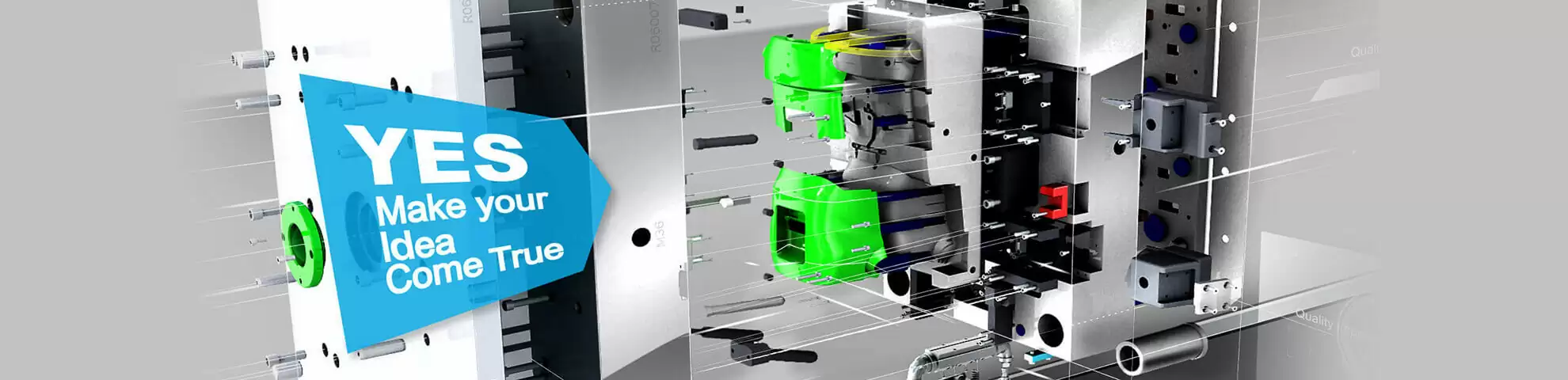
Apply Thermoplastic Molding for a Wide Array of Consumer and Industrial Parts
Apply Thermoplastic Molding for a Wide Array of Consumer and Industrial Parts

Apply Thermoplastic Molding for a Wide Array of Consumer and Industrial Parts
Design freedom • Scalable production • Proven, recyclable materials
From rugged industrial housings and gears to sleek consumer electronics and household products, thermoplastic molding is the backbone of modern manufacturing. When you apply thermoplastic molding strategically, you get repeatable quality, competitive unit cost, and broad material choice—all while keeping future design changes and sustainability in view.
Use this guide—and the TaiwanMoldMaker.com network—to turn your part concepts into production-ready thermoplastic components that ship on time and on spec.
Explore our end-to-end services:
Custom Mold & Design Maker → Mold Service → Injection Mold → Molding → Customer Examples → Contact
Why thermoplastic molding is so versatile
Unlike thermosets, thermoplastics soften when heated and harden when cooled, which makes them:
-
Highly moldable into complex shapes with fine detail.
-
Reprocessable and often recyclable, including regrind use where allowed.
-
Compatible with many additives and reinforcements (glass fibre, impact modifiers, UV stabilizers, flame retardants, etc.).
This flexibility allows a single technology—thermoplastic injection molding—to serve:
-
Consumer goods and appliances
-
Automotive and transportation
-
Industrial equipment and tools
-
Electronics and connectivity
-
Medical and laboratory components
-
Packaging, closures, and logistics parts
The key is matching material + design + tooling + process to each application.
Core thermoplastic families for consumer & industrial parts
Here is a practical overview of commonly used thermoplastics and where they fit best.
Commodity workhorses
-
PP (Polypropylene)
-
Lightweight, chemically resistant, great for living hinges.
-
Used in caps, closures, containers, appliance parts, and automotive trim.
-
-
PE (HDPE / LDPE / LLDPE)
-
Tough and flexible; strong chemical resistance.
-
Used in containers, bins, protective parts, and logistics items.
-
Engineering thermoplastics
-
ABS / PC-ABS
-
Good strength and impact, easy to mold, paintless cosmetics with texture and masterbatch.
-
Ideal for housings, handles, covers, interior automotive parts.
-
-
PC (Polycarbonate)
-
High impact strength, available clear; suitable for protective covers and lenses.
-
-
PA6 / PA66 / PA12 (Nylon)
-
Strong, fatigue-resistant; available glass-filled for structural parts.
-
Used for gears, brackets, clips, under-hood and mechanical components.
-
-
POM (Acetal)
-
Low friction and good wear properties; ideal for mechanisms, gears, latches.
-
High-performance and specialty
-
PBT / PET – Good dimensional stability, often for connectors and electrical components.
-
PEEK / PEI / PPS / PPSU – High strength at elevated temperatures, chemical resistance; for demanding industrial, aerospace, and medical applications.
-
TPE / TPU – Soft-touch, sealing, vibration damping; often overmolded onto harder substrates.
-
COC / COP, PMMA – Clear, optical, or microfluidic applications.
We help you shortlist candidate resins based on temperature, chemicals, mechanical loads, regulatory needs, and cost targets.
Consumer vs. industrial requirements—same process, different emphasis
Consumer products
Focus on:
-
Cosmetics: texture, gloss, colour, visible knit lines, and gate vestiges.
-
Touch & feel: soft-touch zones, tactile feedback, squeak & rattle behaviour.
-
Brand consistency: Pantone/RAL colour control, ΔE targets, logo and surface treatment.
Industrial parts
Focus on:
-
Strength & life: load capacity, fatigue, creep, and impact in harsh conditions.
-
Environment: oils, fuels, cleaners, UV, humidity, temperature cycling.
-
Maintainability: tolerance stack-ups, interchangeability, and robust snap fits or fasteners.
Thermoplastic molding can handle both—the tooling and DFM strategy simply shifts emphasis.
Design for manufacturability (DFM) with thermoplastics
Regardless of sector, good thermoplastic parts follow a few core rules:
-
Uniform wall thickness
-
Aim for consistent walls (often 1.5–3.0 mm for many resins); avoid heavy masses that cause sink and long cycles.
-
-
Ribs instead of thick walls
-
Use ribs and gussets to add stiffness while controlling weight and cooling.
-
-
Draft angles
-
Add 1–2° draft (or more on textured surfaces) so parts eject cleanly and don’t scuff.
-
-
Fillets and radii
-
Remove sharp internal corners to reduce stress concentrations and improve flow.
-
-
Gate and parting-line planning
-
Locate gates and parting lines away from critical cosmetic or sealing areas; design ejector patterns carefully.
-
At TaiwanMoldMaker.com, we package these insights into a 48-Hour DFM Pack with flow/cool/warp simulation, gate and cooling proposals, and a risk log before any steel is cut.
Tooling strategies for different volumes and product stages
Early-stage and moderate volume
-
Aluminum or hybrid steel tools for faster build and lower cost.
-
MUD or insert tooling to share bases across multiple projects.
-
Single or low-cavity tools for fast design iteration and lower initial investment.
Mature, high-volume product lines
-
Fully hardened steel tools for life and consistency.
-
Multi-cavity or family tools to reduce unit cost.
-
Options for two-shot, overmold, co-injection, or conformal cooling when justified by volume and performance.
We can start you with a bridge tool, then copy-cavity to full production steel once demand is proven.
Process control: from basic molding to scientific production
For both consumer and industrial parts, we recommend scientific molding to stabilize quality:
-
V/P transfer by pressure, not guesswork on screw position.
-
Cavity-pressure sensors on critical tools for repeatable part weight and dimensions.
-
Gate-freeze and weight-ladder studies to set pack/hold times and pressures.
-
Balanced cooling and, where ROI is strong, conformal-cooled inserts to reduce cycle time and stress.
Data from the machines flows into MES dashboards tracking:
-
OEE (availability, performance, quality)
-
CpK on CTQs
-
Scrap reasons and trends
-
Energy per kg (kWh/kg) and lot genealogy
That gives your engineering and purchasing teams real-time visibility into performance.
Typical project flow for thermoplastic molding
A streamlined consumer or industrial program might look like this:
-
Day 0–2: 48-Hour DFM & Risk Pack → alignment call.
-
Day 3–10: Tool design and build (Al/MUD or pre-hardened steel); EOAT/fixtures in parallel.
-
Day 11–13: T0 trial – weight ladder, gate-freeze, cavity balance, preliminary FAIR.
-
Day 14–15: T1 – full FAIR + CMM/scan, cosmetic sign-off, preliminary DOE.
-
Day 16–20+: Window confirmation, alarms/lockouts set, samples to stakeholders, ramp planning.
Complex multi-cavity or high-performance resin programs may run ~20–28 days to T0, depending on geometry and validation scope.
RFQ checklist (copy/paste; it reduces back-and-forth)
When you are ready to apply thermoplastic molding for your consumer or industrial parts, send us:
-
Project name and target launch date
-
3D CAD (STEP/IGES) + 2D drawings with CTQs and GD&T
-
Application & environment
-
Loads (static/dynamic/impact)
-
Temperature range
-
Chemicals, UV, moisture, cleanliness needs
-
-
Material requirements
-
Preferred resin families (e.g., ABS, PP, PA, PC, PBT, PEEK, TPE) or property targets
-
Regulatory needs (UL/FR, food/medical, RoHS/REACH, etc.)
-
-
Volume profile
-
Prototype/pilot quantities
-
12–36-month annual volume forecast
-
-
Cosmetic expectations
-
Texture codes, colour standards, viewing zones
-
-
Any special processes
-
Overmold, two-shot, insert molding, co-injection, clean room, ESD, specific packaging
-
Send your details here → Contact
Why use the TaiwanMoldMaker.com network for thermoplastic molding?
-
Broad thermoplastic experience across consumer goods, automotive, industrial, electronics, and medical sectors.
-
Simulation-led DFM, robust tooling standards, and scientific molding for consistent performance.
-
Standardized, robot-ready cells with MES visibility so you can manage quality, cost, and ESG metrics.
-
A clear bridge-to-scale path from prototypes and niche product lines to high-volume, multi-cavity production.
Start here:
Injection Mold → Molding → Mold Service → Customer Examples → Contact
