






Embrace Soft Tooling for Injection Molding to Affordably Validate Design Concepts
Embrace Soft Tooling for Injection Molding to Affordably Validate Design Concepts
Embrace Soft Tooling for Injection Molding to Affordably Validate Design Concepts
Lower upfront cost • Faster tooling • Real production materials
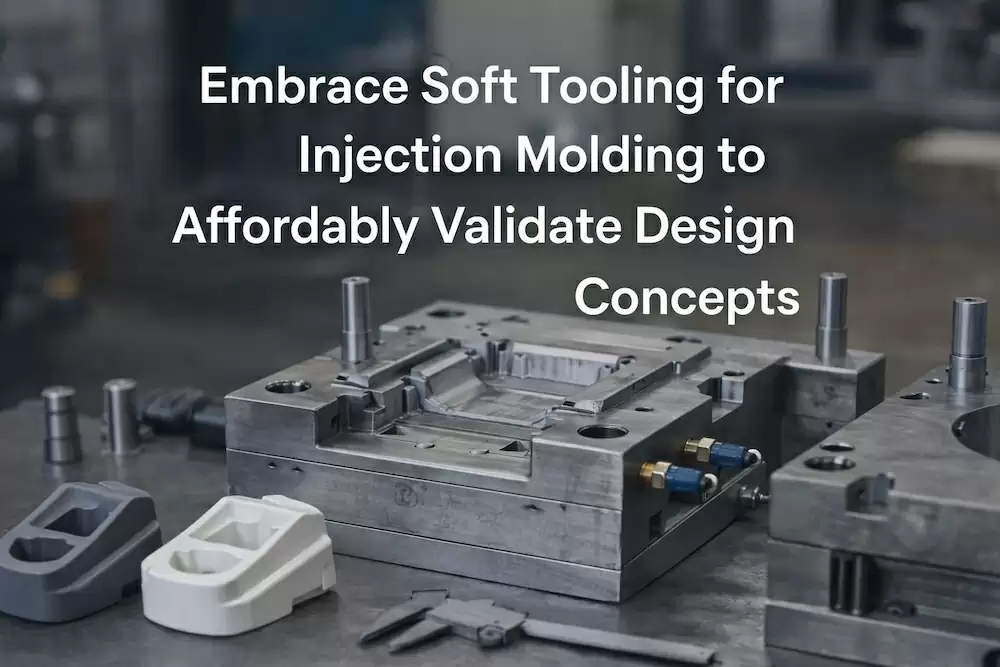
Early in a product’s life, you rarely know the “final” design. Details change after user feedback, reliability tests, or investor demos. Instead of locking into expensive, long-lead production tools, it is smarter to embrace soft tooling for injection molding to affordably validate design concepts.
Through the TaiwanMoldMaker.com network, you can use aluminium, hybrid steel, or modular insert tools to get real injection-molded parts quickly—without the financial risk of premature production tooling.
Explore our end-to-end services:
Custom Mold & Design Maker → Mold Service → Injection Mold → Molding → Customer Examples → Contact
What “soft tooling” means in injection molding
Soft tooling focuses on speed and flexibility, not extreme lifetime:
-
Aluminium molds – quick to machine, excellent for prototypes and low–medium volumes.
-
Hybrid tools – aluminium + pre-hardened steel in high-wear or high-detail zones.
-
MUD / insert systems – interchangeable inserts in a shared mold base, so only the cavity inserts change.
-
3D-printed or modular inserts (where appropriate) – for complex cooling or short-run feature trials.
Instead of designing one “forever” tool, you deliberately design a learning tool that can support:
-
Engineering builds
-
Pilot and beta runs
-
Early commercial shipments for niche or high-value clients
Once the design stabilizes, you upgrade to production steel and higher cavitation using everything learned from the soft tool.
Why use soft tooling to validate design concepts
1. Lower risk and lower upfront cash burn
-
Smaller, simpler tools mean lower tooling investment.
-
Changes are cheaper—often limited to inserts, gates, or local geometry instead of full new molds.
-
You can test multiple design variants (A/B concepts, alternative features) without committing to multiple steel production tools.
2. Faster lead times
-
Aluminium and MUD tools can typically be cut and assembled faster than hardened steel.
-
You get molded samples within days, not months—critical for startups and fast-moving product teams.
3. Real materials, real processes
Unlike many prototyping methods:
-
Soft tooling still uses standard injection molding machines and production-grade resins.
-
You can evaluate fit, function, assembly, impact, and cosmetic behaviour under realistic conditions.
-
Test data from soft-tool parts actually predicts how the final product will perform in production.
When soft tooling is the right choice
Soft tooling is ideal if:
-
You expect multiple design spins (startups, new platforms, first-time plastic products).
-
Annual volume is uncertain, or the first 12–24 months will be low to moderate.
-
You need investor demo units, pilot batches, or regulatory/submission samples quickly.
-
Your product is high mix / low volume—many variants in small quantities.
-
You plan to learn and scale: soft tool → optimized design → multi-cavity production tool.
If your design is frozen, volumes are high, and product life is long, we can move directly to production steel—but many customers choose at least one soft-tool step to de-risk.
Technical considerations for soft injection molds
Even with a “soft” tool, engineering discipline matters:
-
Material & hardness selection
-
Aluminium alloys for speed and heat transfer.
-
Pre-hardened steel inserts in gate, runner, and wear-heavy regions.
-
-
Cooling design
-
Efficient water channels; optional conformal-cooled inserts if cycle time is critical.
-
-
Gate & runner strategy
-
Easy-to-modify gate locations and sizes so you can adjust flow and cosmetics after T0.
-
-
Insert-friendly design
-
High-risk features (snap fits, thin ribs, undercuts) placed in replaceable inserts.
-
Localized geometry changes without scrapping the entire mold.
-
Everything is documented in our Tooling Dossier, so lessons from the soft tool feed directly into the future production tool.
Typical soft-tool project flow
A streamlined, soft-tool program in our network often follows this pattern:
-
Day 0–2 – 48-Hour DFM & risk pack
Flow/cool/warp simulation, gate and cooling proposals, and a prioritized risk list. -
Day 3–10 – Tool build (soft tooling)
Aluminium or hybrid inserts machined; MUD base configured; basic EOAT/fixtures designed. -
Day 11–13 – T0 in production resin
Short-shot study, weight ladder, gate-freeze, cavity balance check (if multi-cavity). -
Day 14–15 – T1 trial
FAIR + CMM/scan on CTQs, cosmetic review, small engineering build shipped for testing. -
Beyond Day 15 – Learn & decide
You run tests, gather feedback, and then either-
adjust the soft tool,
-
or commission production steel/copy-cavity tools based on validated data.
-
How to get the most value from soft tooling
To truly “validate design concepts,” plan your soft tooling around learning:
-
Define clear questions: what do you want to confirm—fit, ergonomics, drop performance, assembly time, aesthetics, regulatory tests?
-
Tie each question to measurable tests: drop height, torque, leak, cycling, user feedback scores, etc.
-
Freeze non-critical details later: keep logos, textures, and small styling details flexible early on.
-
Build in measurement features: datums, witness surfaces, and test coupons where needed.
We can help you set up this learning plan, so the soft tool pays for itself in avoided mistakes.
RFQ checklist (copy/paste for soft tooling projects)
When you’re ready to investigate soft tooling with TaiwanMoldMaker.com, include:
-
Project name and target dates (first demo, pilot build, launch).
-
3D CAD (STEP/IGES) + any 2D drawings with critical dimensions highlighted.
-
Intended use case and environment (loads, temperature, chemicals, regulatory notes).
-
Preferred or candidate resin families (or property requirements if undecided).
-
Planned quantities:
-
Prototype / pilot
-
12–24-month volume if the product succeeds.
-
-
Which elements you expect may change after testing (geometry, material, cosmetics).
-
Any special requirements (overmold, inserts, cleanroom, ESD, special packaging).
Send your brief here → Contact
Why use the TaiwanMoldMaker.com network for soft tooling?
-
Soft-tooling strategies (aluminium, hybrid, MUD/insert tools) tuned for startups and early-stage programs.
-
Production-grade molding and scientific processing, so data from prototypes carries into final production.
-
Documented learning loop from soft tool → optimized design → full-steel, multi-cavity production tools.
-
One accountable partner from DFM and tool design to T0/T1 trials, testing, and eventual scale-up.
Start here:
Injection Mold → Molding → Mold Service → Customer Examples → Contact
