






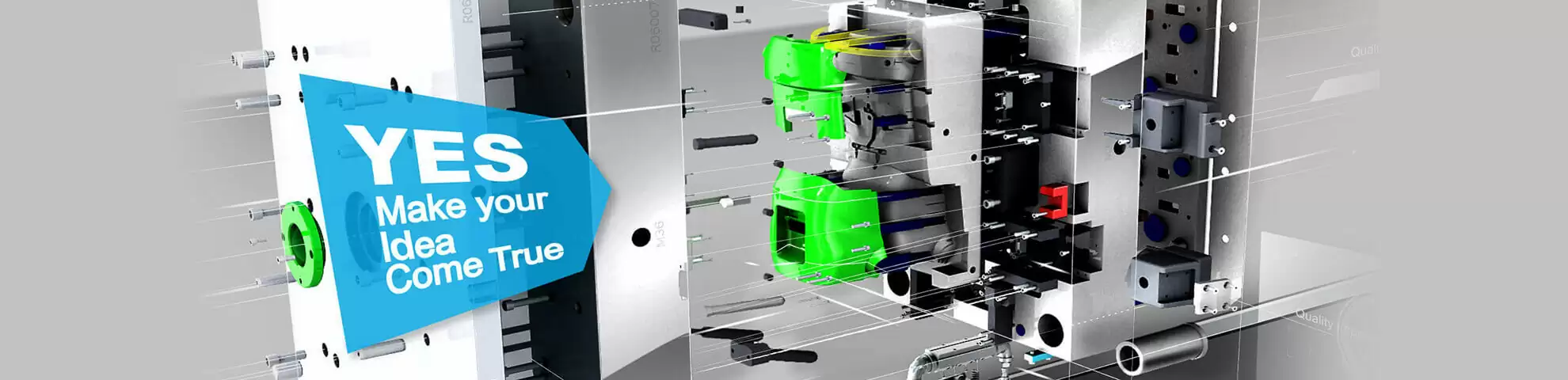
Adopt scientific injection molding methods for data-driven production optimization
Adopt scientific injection molding methods for data-driven production optimization

Adopt Scientific Injection Molding Methods for Data-Driven Production Optimization
V/P by pressure • Cavity-pressure sensors • DOE → Process window → Golden recipe
Scientific molding replaces guesswork with measured, repeatable decisions. With the TaiwanMoldMaker.com network, you get sensor-equipped cells, validated DOE, and live MES dashboards that cut scrap, stabilize cycles, and accelerate approvals.
Explore our end-to-end services:
Custom Mold & Design Maker → Mold Service → Injection Mold → Molding → Customer Examples → Contact
What “scientific molding” means (our working definition)
-
Transfer by pressure (not position): Set V/P based on cavity pressure and screw pressure to achieve repeatable part weight & dimensions.
-
Gate-freeze proven pack/hold: Use weight ladder + pressure decay to set hold time and pressure scientifically.
-
Cooling engineered first: Turbulent circuits, balanced loops, and (where ROI is strong) conformal-cooled inserts.
-
Measured window: Screening DOE → narrowed process window with nominal / high / low bounds and alarms on the HMI & MES.
-
Closed loop to the business: Live OEE, CpK, scrap, kWh/kg, genealogy exposed via shareable dashboards for remote audits.
The data pipeline (from press to decisions)
-
Sensors & signals: cavity pressure/temperature, screw position/pressure, clamp tonnage, mold-temp loops.
-
Derived KPIs: fill time, viscosity index, transfer pressure, hold pressure integral, freeze time, recovery time, cycle time.
-
Quality link: every FA sample and production lot ties metrology (FAIR, CMM/scan) to the exact recipe + shot history.
-
Dashboards: operator view for alarms, engineer view for DOE and trend, management view for OEE & energy.
Parameter setup playbook (shot-to-shot stability)
-
Drying & material prep: per grade datasheet; dryer dew point monitored/logged.
-
Shot size & cushion: 1.0–1.5× part + runner volume; consistent cushion > 5 mm (tool-dependent).
-
Injection: multi-stage velocity to hit target fill time (fast enough to avoid freeze-off, slow enough to avoid jetting).
-
Transfer: by pressure at the knee; verify with cavity-pressure trace.
-
Hold: weight ladder to determine hold pressure/time; confirm with gate-freeze study.
-
Cooling: set for dimensional stability and ejection temp; balance vs. cycle time and whitening.
-
Recovery: screw RPM/back pressure to control melt quality without shear burn.
-
Clamp force: just enough to seal; track tonnage vs. flash.
DOE & process-window methodology
-
Screening DOE (e.g., 2⁴ fractional): factors like melt temp, mold temp, fill time, transfer pressure.
-
Response Surface on critical interactions (e.g., temp × hold pressure) to optimize CTQs.
-
Process Window: publish Nominal / High / Low with rationales; set HMI hard limits and MES alarms.
-
Capability proof: CpK ≥ 1.33 (or per contract) on CTQs before SOP; retain traces and samples.
Inline quality & automation
-
Vision SPC on cosmetics and critical dims with auto-reject lanes.
-
Leak/weld/torque tests integrated at end-of-line.
-
Robot take-out and closed transfer reduce touchpoints and variability.
-
Recipe governance: role-based edits, e-sign change logs, and version rollback.
Energy & sustainability metrics
-
Track kWh/kg per job, per tool, and per resin to quantify savings from cycle and temperature optimization.
-
Report scrap % and regrind use (where allowed) for ESG scorecards.
Example timeline (pilot → ramp)
-
Day 0–2: 48-Hour DFM Pack (flow/cool/warp, cycle model, risk log) → alignment call
-
Day 3–10: Tool build (Al/MUD or pre-hard steel); sensor plan; EOAT/fixtures in parallel
-
Day 11–13: T0: weight ladder, gate-freeze, cavity balance; preliminary metrics
-
Day 14–15: T1 + FAIR + CMM/scan; screening DOE completes; draft window
-
Day 16–20: Window confirmation, alarms/lockouts set; MES dashboard shared; ship FA parts
-
Day 21+: Copy-cavity proposal; ramp with capability checks at target takt
(Steel-first or multi-cavity optics/two-shot typically run ~20–28 days to T0.)
RFQ checklist (copy/paste—prevents rework)
-
Target T1/SOP dates and milestone gates (DFM, T0, T1).
-
CAD (STEP/IGES) + 2D with CTQs/GD&T and cosmetic map.
-
Resin(s) & alternates (UL/FR/UV/food/medical); drying specs if available.
-
Tooling plan (MUD/Al/steel; cavitation; sensors; conformal-cooling candidates).
-
Validation scope (DOE, FAIR, CMM/scan, CpK targets, vision SPC).
-
Data access (MES links for OEE, CpK, scrap, kWh/kg, genealogy).
-
Packaging & logistics (FA courier, export pack, Incoterms).
Send your package here → Contact
Why TaiwanMoldMaker.com
-
Sensor-equipped, robot-ready cells with standardized tooling libraries.
-
DOE-driven process windows that lock a golden recipe for repeatability.
-
Audit-ready documentation and live dashboards so stakeholders can approve fast.
Start here:
Injection Mold → Molding → Mold Service → Customer Examples → Contact
