






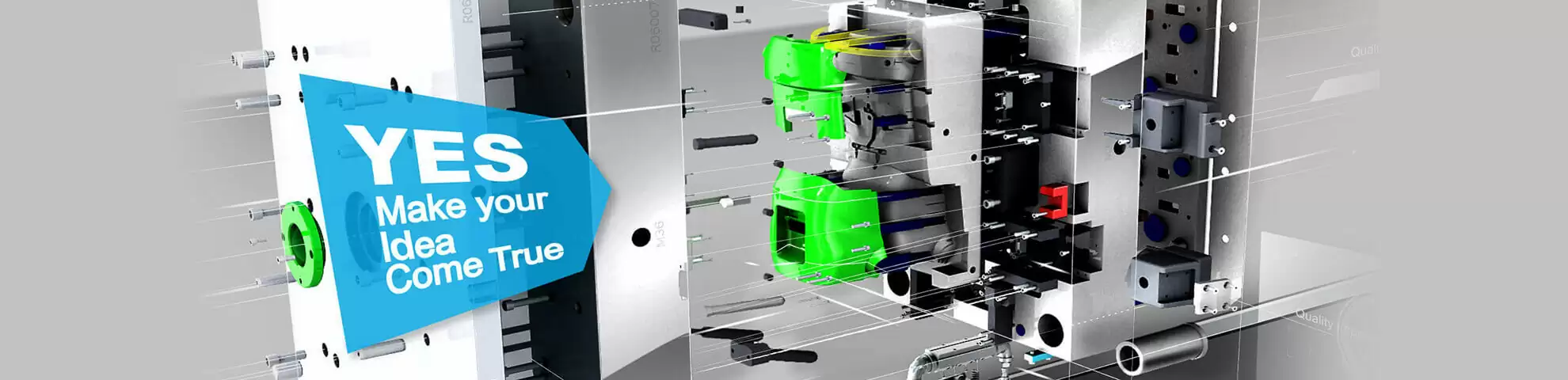
Apply Plastic Injection Overmolding to Combine Rigid and Soft Materials in a Single Part
Apply Plastic Injection Overmolding to Combine Rigid and Soft Materials in a Single Part
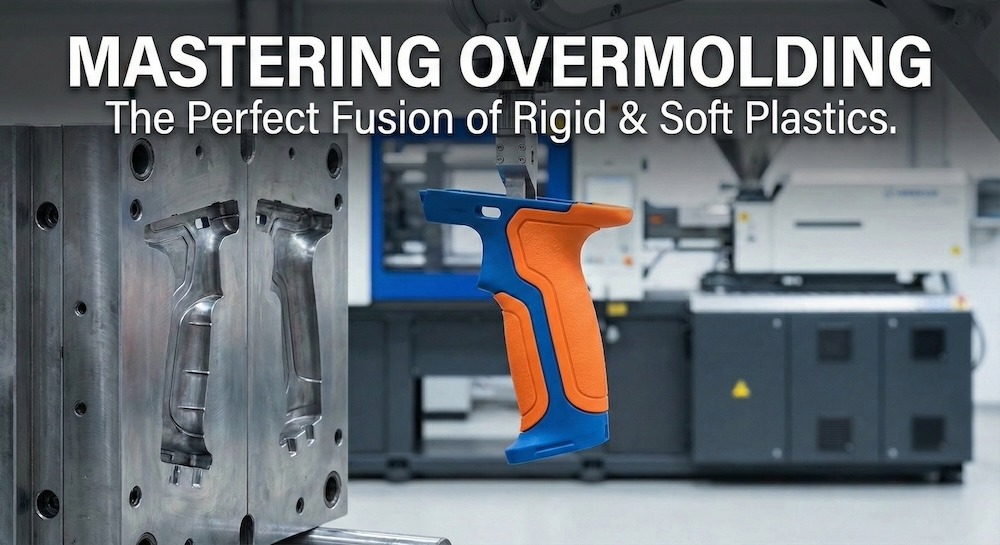
Apply Plastic Injection Overmolding to Combine Rigid and Soft Materials in a Single Part
Integrated functionality • Improved ergonomics • Strong mechanical bonding
Modern products increasingly require multiple material properties in a single component—rigidity for structure, softness for grip or sealing, and durability for long-term use. Plastic injection overmolding is a proven manufacturing method that delivers all of these benefits in one streamlined process.
At TaiwanMoldMaker.com, we help customers apply plastic injection overmolding to combine rigid and soft materials in a single part, reducing assembly steps, improving product performance, and enabling scalable, production-ready designs.
What is plastic injection overmolding?
Plastic injection overmolding is a multi-step injection molding process where a second material—typically a soft elastomer such as TPE or TPU—is molded directly onto a rigid plastic substrate (such as ABS, PC, or nylon).
The result is a single integrated part with:
-
Structural strength from the rigid base
-
Soft-touch comfort, sealing, or vibration damping from the overmold
-
A permanent mechanical or chemical bond between materials
This process eliminates secondary assembly, adhesives, or fasteners.
Learn how overmolding fits into our tooling workflow under Injection Mold.
Key benefits of plastic injection overmolding
1. Combine function and comfort
Overmolding allows designers to add:
-
Soft grips and ergonomic surfaces
-
Seals and gaskets for moisture or dust protection
-
Shock absorption and vibration reduction
This is ideal for consumer electronics, medical devices, hand tools, and industrial controls.
2. Strong, reliable material bonding
When designed correctly, overmolding provides:
-
Mechanical interlock via undercuts or texture
-
Material compatibility for chemical bonding
-
Long-term durability under repeated use
Bond integrity is evaluated early during Custom Mold & Design Maker and DFM reviews.
3. Reduced assembly cost and risk
By integrating multiple materials in one molding process:
-
Manual assembly steps are eliminated
-
Part-to-part variation is reduced
-
Overall production yield improves
This directly lowers labor cost and quality risk at scale.
Common applications for overmolded parts
Plastic injection overmolding is widely used in:
-
Consumer electronics housings and controls
-
Medical device grips and interfaces
-
Power tools and hand tools
-
Wearables and portable devices
-
Automotive interior components
-
Industrial handles, knobs, and connectors
Examples of integrated, production-ready parts can be found in Customer Examples.
Material combinations we support
Typical rigid–soft material pairings include:
-
ABS / PC / PC-ABS + TPE or TPU
-
Nylon (PA) + TPE for structural components
-
POM + TPU for precision mechanical parts
-
Medical-grade plastics + soft elastomers (application-dependent)
Material compatibility, adhesion behavior, and processing windows are validated during Mold Service to ensure stable production.
Design considerations for successful overmolding
Overmolding requires careful engineering to avoid delamination or cosmetic defects:
-
Substrate design
Incorporate undercuts, grooves, or textures to enhance mechanical locking. -
Wall thickness balance
Ensure uniform walls to prevent sink, warpage, or uneven bonding. -
Gate and flow planning
Protect cosmetic areas and ensure consistent soft-material coverage. -
Draft and ejection strategy
Support clean release without damaging the overmolded surface.
These considerations are addressed during early DFM so changes are made before tooling investment.
Tooling approaches for overmolding
Depending on volume and complexity, overmolding can be executed using:
-
Two-shot (2K) injection molds
Fully automated, ideal for high-volume programs. -
Insert overmolding
Rigid parts molded first, then transferred into a second mold for overmolding—flexible for pilot or mid-volume runs. -
Rotary or indexing molds
Efficient solutions for complex geometries and automation.
Tooling strategy is aligned with production planning through Molding services to ensure smooth T0/T1 trials and ramp-up.
Process control and quality assurance
Consistent overmolding depends on tight control of:
-
Temperature compatibility between materials
-
Injection timing and pressure balance
-
Bond-line integrity and cosmetic inspection
We support:
-
Scientific molding practices
-
First Article Inspection (FAI) and dimensional checks
-
Defined cosmetic standards and sampling plans
-
Lot traceability for production runs
Typical overmolding project timeline
A representative overmolding program may follow:
-
Day 0–2: DFM review and material compatibility confirmation
-
Day 3–10: Tool build (single or two-shot overmold tooling)
-
Day 11–13: T0 trial focusing on adhesion and appearance
-
Day 14–15: T1 samples with inspection reports
-
Day 16+: Pilot or volume production ramp
Timelines vary based on part size, cavitation, and automation level.
RFQ checklist for plastic injection overmolding
To evaluate feasibility and cost efficiently, please provide:
-
3D CAD (STEP/IGES) + 2D drawings
-
Rigid and soft material preferences (or performance targets)
-
Expected annual volume and launch schedule
-
Cosmetic and tactile requirements
-
Environmental or durability considerations
-
Assembly or regulatory requirements (if applicable)
Submit your project details here:
Contact
Why apply overmolding with TaiwanMoldMaker.com
-
Engineering-led DFM and material selection
-
Proven experience with rigid–soft material integration
-
Flexible tooling strategies from pilot to mass production
-
Stable process control and quality documentation
-
One accountable partner from design to production
If you are looking to apply plastic injection overmolding to combine rigid and soft materials in a single part, TaiwanMoldMaker.com provides the tooling expertise and manufacturing discipline needed to deliver functional, high-quality components at scale.
Start here:
Custom Mold & Design Maker →
Injection Mold →
Molding →
Contact
