






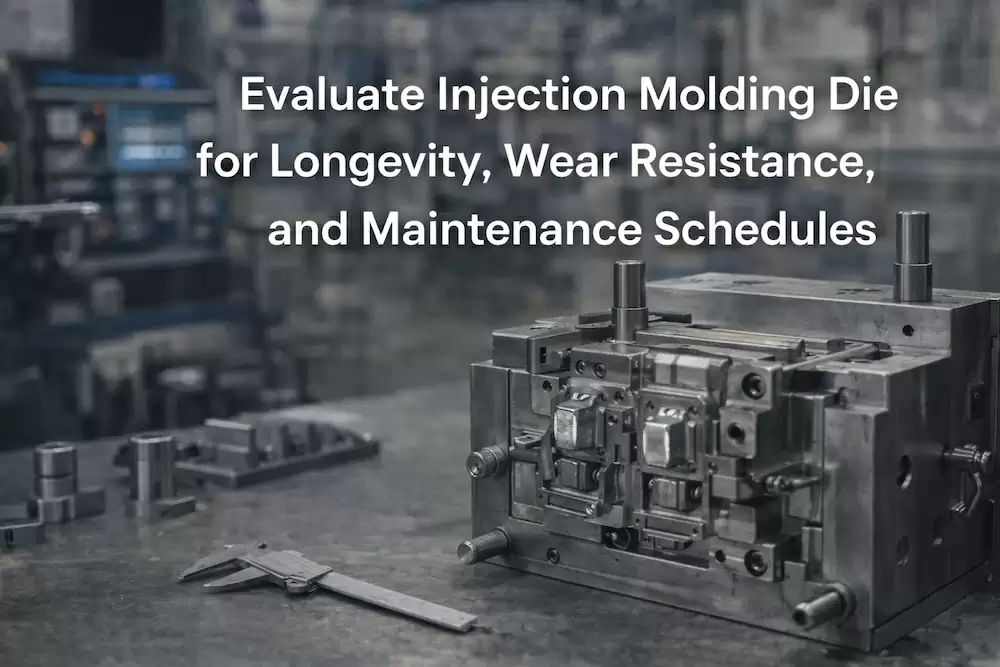
Evaluate Injection Molding Die for Longevity, Wear Resistance, and Maintenance Schedules
Evaluate Injection Molding Die for Longevity, Wear Resistance, and Maintenance Schedules
Evaluate Injection Molding Die for Longevity, Wear Resistance, and Maintenance Schedules
Long tool life • Predictable performance • Lower total cost of ownership
An injection molding die is not just a piece of tooling—it is a long-term production asset. If the die wears prematurely, drifts dimensionally, or lacks a clear maintenance plan, the downstream impact shows up quickly as scrap, downtime, and missed deliveries. That is why it is critical to evaluate injection molding dies for longevity, wear resistance, and maintenance schedules before and after they enter production.
This guide explains how to assess die quality from an engineering and operational perspective, and how the TaiwanMoldMaker.com network helps customers build dies that run reliably for years—not just pass the first trial.
Explore our end-to-end services:
Custom Mold & Design Maker →
Mold Service →
Injection Mold →
Molding →
Customer Examples →
Contact
1. Why die evaluation matters beyond T0 and T1
Many injection molding dies can produce “acceptable” samples at T0 or T1. Fewer can:
-
Hold tolerances after hundreds of thousands or millions of cycles
-
Resist wear from abrasive or glass-filled resins
-
Maintain surface finish and shut-off integrity
-
Run consistently with predictable maintenance intervals
A proper die evaluation looks beyond first samples and focuses on total cost of ownership (TCO) over the tool’s expected life.
2. Key factors that determine die longevity
Steel selection and hardness
The foundation of die life is steel choice and heat treatment:
-
Pre-hardened steels (e.g., P20)
-
Suitable for moderate volumes and non-abrasive materials
-
Faster to machine, lower upfront cost
-
-
Hardened tool steels (e.g., H13, S136, 420SS)
-
Higher wear resistance and dimensional stability
-
Essential for high-volume, tight-tolerance, or cosmetic parts
-
-
Stainless steels
-
Preferred for corrosive environments, medical, or high-humidity applications
-
Proper hardness mapping—documenting hardness targets for cores, cavities, inserts, and wear components—is a basic requirement for long die life.
Resin-driven wear mechanisms
Die wear is strongly influenced by the resin you mold:
-
Glass-filled and mineral-filled plastics (PA+GF, PBT+GF) accelerate erosion in gates, runners, and shut-offs.
-
Flame-retardant grades can be chemically aggressive at elevated temperatures.
-
High-temperature resins (PEEK, PEI, PPS) demand steels and coatings that withstand thermal cycling.
A well-evaluated die anticipates resin behavior and reinforces high-wear zones with inserts, coatings, or upgraded steels.
3. Wear resistance features to look for in a die
When reviewing or specifying an injection molding die, assess whether it includes:
-
Replaceable wear inserts
Gates, runners, shut-offs, and lifter tips designed as inserts instead of one-piece blocks. -
Surface treatments and coatings
Nitriding, PVD, or hard chrome in areas exposed to abrasion or sliding contact. -
Robust shut-off design
Proper angles, contact area, and support to prevent flash as the tool ages. -
Balanced cooling and thermal control
Uneven cooling leads to thermal fatigue, cracking, and dimensional drift over time.
These features directly influence how long a die can run before major refurbishment is required.
4. Design and build quality indicators
A long-lasting die is usually obvious to trained eyes. Positive indicators include:
-
Clean, symmetric parting lines with uniform contact
-
Consistent surface finish and polish across cavities
-
Standardized components (ejectors, springs, guides) from recognized suppliers
-
Clear identification of cavities, inserts, and revision levels
-
Logical access for maintenance without full disassembly
Conversely, non-standard hardware, inaccessible wear areas, or undocumented modifications are warning signs.
5. Establishing effective maintenance schedules
Even the best injection molding die requires planned maintenance. The goal is to service the die before quality degrades.
Shot-based maintenance planning
We recommend defining maintenance intervals by shot count, not calendar time:
-
Daily / per shift: cleaning, visual checks, lubrication
-
Minor PM (e.g., every 50k–100k shots):
-
Inspect gates, vents, ejectors
-
Clean cooling channels
-
Check shut-off contact
-
-
Major PM (e.g., every 300k–500k shots):
-
Measure critical dimensions
-
Replace wear inserts
-
Re-polish cosmetic surfaces if required
-
Actual intervals depend on resin, cycle time, and cavitation.
Documentation that supports maintenance
A properly evaluated die should include a Tooling Dossier, covering:
-
Steel grades and hardness values
-
2D/3D drawings and insert breakdown
-
Cooling and wiring diagrams
-
Torque values and assembly instructions
-
Recommended PM intervals and spare parts list
This documentation ensures maintenance work is repeatable and auditable, even years after the die is built.
6. Monitoring die health during production
Modern production environments allow die condition to be monitored continuously:
-
MES integration to track shot counts, downtime, and defect trends
-
Correlation between defects (flash, short shots) and wear-prone areas
-
Energy and cycle-time drift as early indicators of cooling or friction issues
-
Cavity-level scrap tracking for multi-cavity tools
By linking die performance to production data, engineering teams can predict maintenance needs instead of reacting to failures.
7. Evaluating an existing die for purchase or transfer
If you are assessing an existing injection molding die (for relocation, second sourcing, or acquisition), consider:
-
Remaining estimated tool life based on wear condition and shot history
-
Availability of drawings, spare parts, and maintenance records
-
Compatibility with your machines (tonnage, tie-bar spacing, hot runner systems)
-
Cost and feasibility of refurbishment or cavity rework
A structured die audit often prevents expensive surprises after transfer.
8. RFQ checklist for long-life injection molding dies
When requesting a quote or evaluating a die supplier, include:
-
Target annual volume and expected tool life
-
Resin types, including fillers or flame retardants
-
Cosmetic and tolerance requirements
-
Preferred steel grades and surface treatments
-
Planned maintenance philosophy (on-site vs. external)
-
Requirement for Tooling Dossier and PM documentation
-
Expectations for refurbishment and spare-part support
Send your requirements here →
Contact
Why evaluate dies with TaiwanMoldMaker.com
-
Engineering-led die design focused on longevity and wear resistance
-
Proven experience with abrasive, high-temperature, and high-volume applications
-
Structured maintenance planning tied to real production data
-
Full documentation to support long-term operation and multi-plant transfer
If you want to evaluate injection molding dies for longevity, wear resistance, and maintenance schedules—and avoid hidden tooling costs—TaiwanMoldMaker.com provides the expertise and discipline to protect your investment from the first shot to the last.
Start here:
Injection Mold →
Molding →
Mold Service →
Customer Examples →
Contact
