






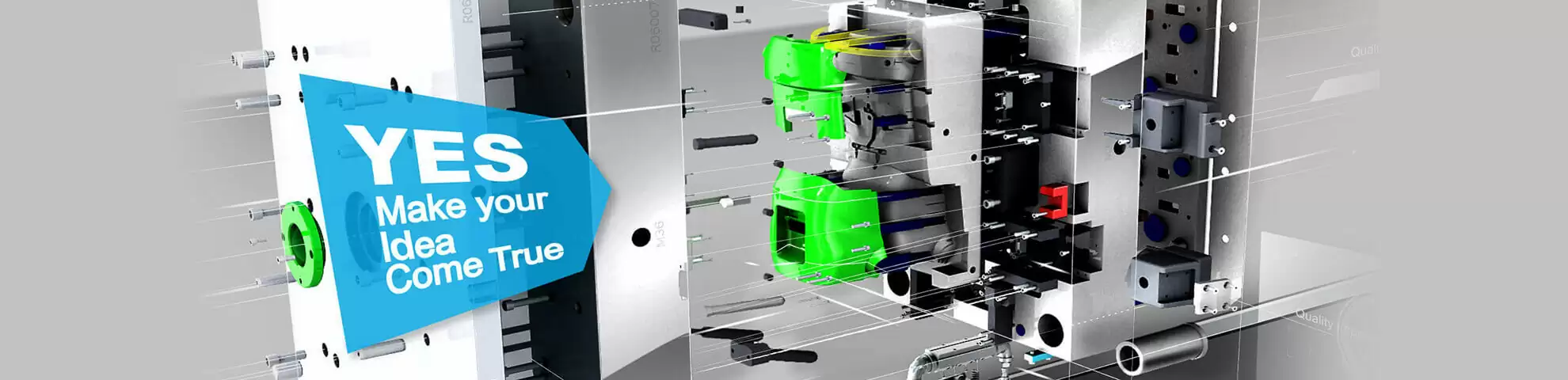
Harness INTERTECH injection molding machinery for robust, efficient production cycles
Harness INTERTECH Injection Molding Machinery for Robust, Efficient Production Cycles
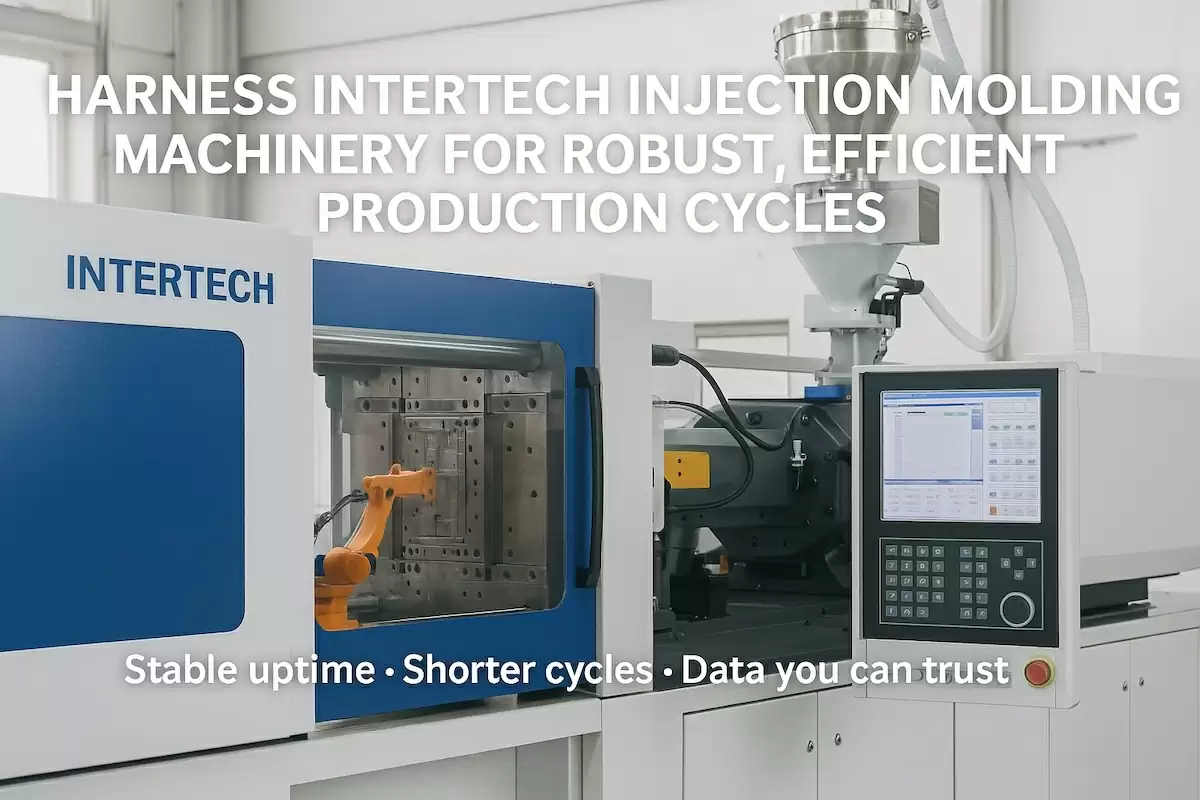
Harness INTERTECH Injection Molding Machinery for Robust, Efficient Production Cycles
Stable uptime • Shorter cycles • Data you can trust
When your margins depend on every second of cycle time and every percentage point of scrap, the quality of your injection molding machinery and cells matters as much as the tool itself. By harnessing INTERTECH injection molding machinery—deployed through the TaiwanMoldMaker.com network—you get standardized, robot-ready cells that are built for robust, efficient production cycles from launch through end-of-life.
Explore our end-to-end services:
Custom Mold & Design Maker → Mold Service → Injection Mold → Molding → Customer Examples → Contact
Why machinery choice drives real-world efficiency
“Same tonnage” doesn’t mean the same result. INTERTECH machines and cells are configured to:
-
Stabilize cycles with precise injection, clamp control, and mold-temperature management.
-
Protect tools via gentle clamp profiles, accurate parallelism, and monitored tie-bar loads.
-
Enable scientific molding with accurate sensor feedback and repeatable screw/pressure control.
-
Expose production data (OEE, CpK, scrap, energy) in real time through MES integration.
The outcome is not just a running press—it’s a production platform you can plan your business around.
Cell design: built for robust day-to-day operation
Each INTERTECH molding cell is engineered as a complete ecosystem:
-
Right-sized clamp tonnage matched to part projected area and process window—no over-clamping or flashing.
-
Stable plasticizing unit with precise back-pressure, screw RPM, and melt-temperature zones.
-
Mold-temperature control via dedicated TC units and balanced cooling circuits.
-
Integrated EOAT (robot take-out) to protect parts and maintain consistent cycle time.
-
Standardized hookups for water, power, pneumatics, and hydraulics to minimize changeover time.
Cells are specified around your resin, your tool, and your takt time—not just generic catalog numbers.
Core efficiency levers we tune
1. Faster, more stable cycles
-
Thermal optimization using simulation and conformal-cooling options where ROI is strong.
-
Verified gate-freeze to avoid over-packing or premature ejection.
-
Automatic purging and start-up sequences to minimize scrap when restarting lines.
2. Lower scrap and rework
-
Cavity-pressure sensors and transfer-by-pressure to stabilize part weight and dimensions.
-
Vision SPC to screen cosmetics and critical dimensions on every shot.
-
Alarm windows and lockouts when parameters drift outside the validated process window.
3. Reduced downtime
-
Preventive maintenance plans on presses, robots, and molds with clear shot-based intervals.
-
Critical spare kits for each cell (heaters, thermocouples, seals, filters, EOAT wear parts).
-
MES-driven downtime logging so recurring failure modes are visible and addressed.
Scientific molding on INTERTECH machines
INTERTECH machinery is configured to support data-driven process development:
-
Multi-stage velocity-to-pressure (V/P) profiles tuned by cavity pressure traces rather than guesswork.
-
Weight ladders and hold-pressure/time studies to determine the true pack requirements.
-
DOE-based process windows (Nominal / High / Low) stored as locked recipes.
-
Monitoring of fill time, peak pressure, freeze time, recovery, and cycle shot-to-shot.
This turns your machines into measurement tools, not just plastic pumps.
MES, dashboards, and traceability
Every INTERTECH cell can be connected to an MES layer so stakeholders see:
-
OEE (availability, performance, quality) per tool, per part number, per shift.
-
CpK on CTQs, linked to lot numbers and recipe versions.
-
Scrap reasons and pareto charts, tied to root-cause and corrective actions.
-
Energy per kg (kWh/kg) to quantify cost and sustainability improvements.
-
Full lot genealogy, mapping parts to tool numbers, cavities, operators, and parameter ranges.
This is the foundation for remote audits, customer reporting, and continuous improvement.
Flexible automation for real-world products
Not every part needs a huge robot cell—but every part benefits from repeatability:
-
Simple pick-and-place robots for small, precise components.
-
Side-entry or top-entry EOAT for fast, low-interference take-out.
-
Inline functions—degating, insert-placement, leak testing, marking, labelling—dialed in according to volume and ROI.
-
Upgrade paths so that a cell can start semi-manual and later be scaled up with additional automation as demand grows.
Typical implementation timeline (tool + INTERTECH cell)
-
Day 0–2: 48-Hour DFM & Cell Concept Pack
-
Part & tool review (flow/cool/warp)
-
Preliminary machine sizing and cooling/EOAT concept
-
Risk log for cycle time, tonnage, automation
-
-
Day 3–10: Tool build (Al/MUD or steel) in parallel with cell configuration
-
Robot and EOAT design
-
Mold-temperature and chiller assignments
-
MES tag & recipe templates
-
-
Day 11–13: T0
-
Scientific molding setup (V/P, gate-freeze, balance)
-
First OEE/cycle benchmarks
-
Initial scrap analysis
-
-
Day 14–18: T1 + DOE
-
FAIR + CMM/scan
-
Process window definition
-
Alarm bands and lockouts implemented
-
-
Day 19+: Ramp
-
Capability checks (CpK) at target takt
-
Copy-cavity and multi-cell rollout plan if required
-
(Actual timing depends on part complexity, resin, cavitation, and validation scope.)
Applications that benefit from INTERTECH machinery
-
High-volume consumer housings where every second of cycle time impacts cost.
-
Precision gears, clips, connectors that require tight tolerance and stable dimensions.
-
Optical and clear parts where temperature and pressure control avoids stress and knit lines.
-
Regulated sectors (medical, automotive, electronics) that demand traceability and documented process control.
RFQ checklist (copy/paste—this speeds up serious proposals)
When you’re ready to discuss INTERTECH-based production, send:
-
Target T1 and SOP dates, plus volume ramp profile.
-
3D CAD (STEP/IGES) + 2D drawings with CTQs and GD&T.
-
Resin(s) and alternates, including any UL/FR/food/medical/ESD requirements.
-
Expected annual and peak volumes, required takt time or output per shift.
-
Quality & data needs – CpK targets, vision SPC, MES access, traceability, energy reporting.
-
Automation expectations – robot take-out only, or inline degate, weld, test, print, pack.
-
Any existing tools or standards (hot-runner brands, mold base standards, plant interfaces).
Send your brief here → Contact
Why partner with TaiwanMoldMaker.com for INTERTECH machinery
-
Standardized INTERTECH injection molding cells designed around your parts—not generic specs.
-
One accountable owner coordinating tooling, machinery, automation, and validation.
-
Data-driven production optimization using scientific molding and MES dashboards.
-
A clear path from bridge tools to multi-cavity, multi-plant scale-up when demand grows.
Start here:
Injection Mold → Molding → Mold Service → Customer Examples → Contact
